

WEBSITE DESIGN FOR MEDICAL DEVICES AND REGULATED INDUSTRIES
SEOS Design is a Stockholm web agency for medtech, life science and other regulated industries. When we design a medical device website, we keep product claims within the intended purpose and the CE marking, build the approval workflow into the CMS, make the documentation searchable and use SEO/AEO so that both Google and AI assistants describe the product correctly.
A medtech website with us – in brief
- Suits medical technology companies, life science and pharma-related companies and other businesses where wording about the product must be reviewed before it is published.
- Approved wording and claims are collected in a context file for AI, so that we – or you – can efficiently produce new content that is correct from a regulatory point of view.
- Instructions for use, safety information, certificates and publications are modelled as separate collections with version, language and validity – searchable for both people and search engines.
- The structure separates language and market, so that product information and regulatory status can vary between the EU and the US without parallel websites.
- Webflow or a coded website with a headless CMS – the choice depends on the volume of documents, the approval workflow and system integrations. No lock-in period on maintenance.
Long partnerships
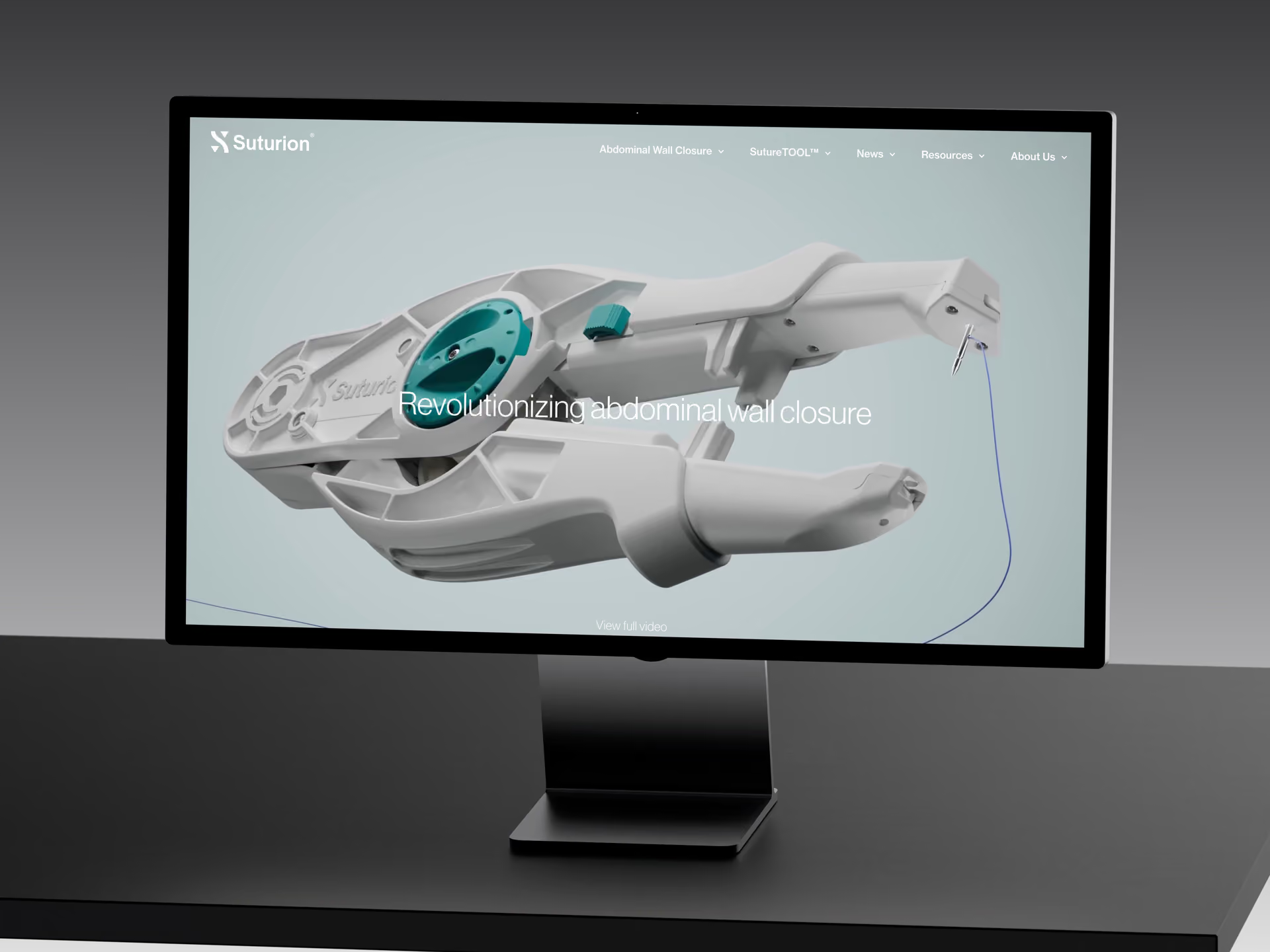
Ongoing development and SEO for the medical technology company Suturion since 2024
4–6 weeks
typical project time from brief to launch
0 months
lock-in period on maintenance and SEO
BUILT FOR REVIEW – NOT JUST LAUNCH
A medtech website is part of our web development service, but with a requirement other websites do not have: everything said about the product must be reviewable, traceable and identical everywhere. That is why we plan the approval workflow, the document model and the roles before design starts, and then build in Webflow or as a coded website with a headless CMS – depending on how much documentation there is to manage and how strict the workflow needs to be. If medical devices are to be sold directly to consumers, we build the shop in Shopify, with the same rules on what can be claimed about the product.
What is includedUX design · UI design · Webflow websites · Headless CMS · Content production · AEO optimisation
FROM APPROVED WORDING TO PUBLICATION
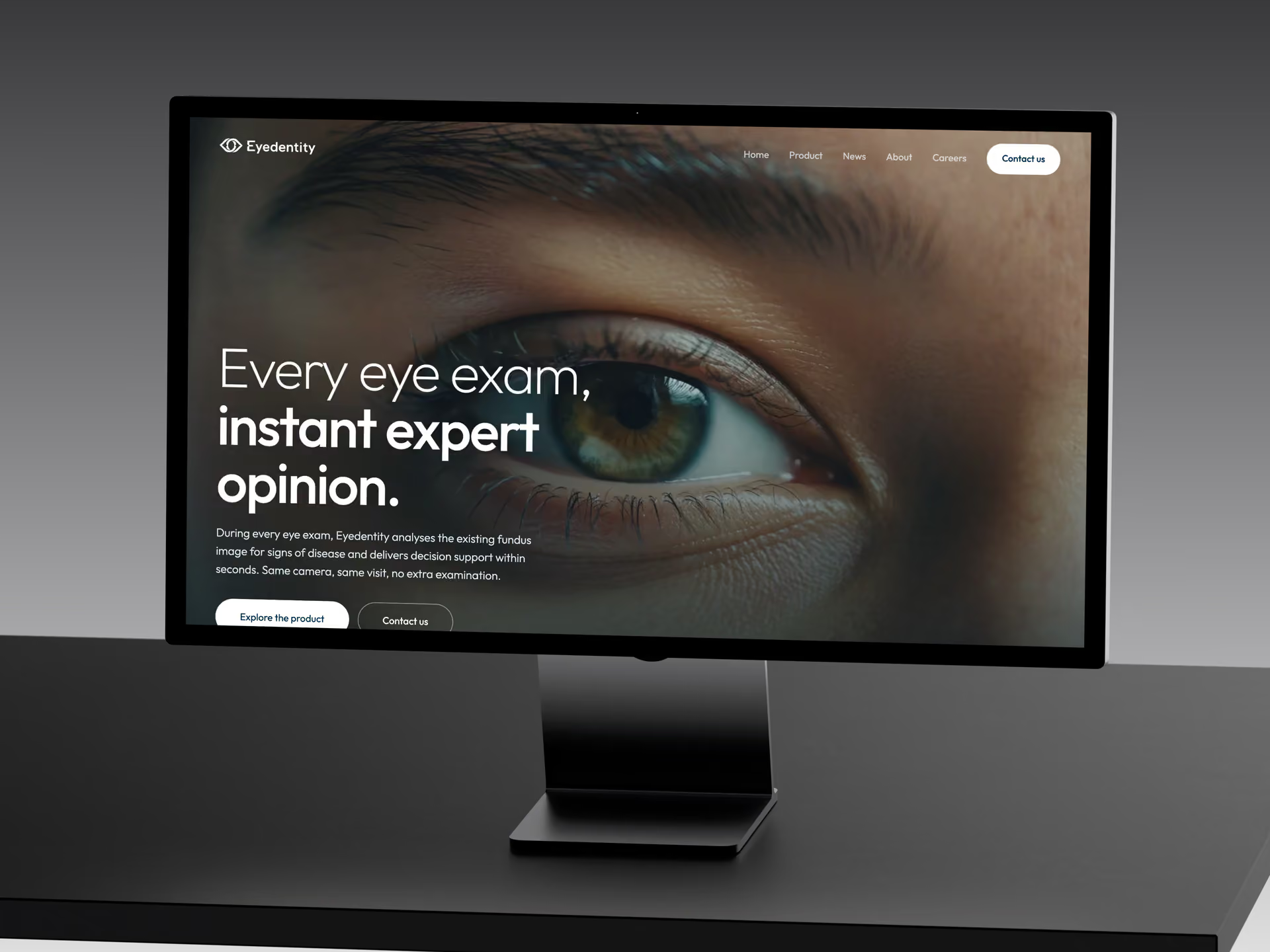
We are a fast-growing startup that came to SEOS with a tight deadline. In a short time, they had to turn our brand book into a professional website. They asked the right questions and quickly got to grips with both our technology and what we wanted to say. In under three weeks they launched a website where the message, design and animations explain Eyedentity and what we do in the right way.
 Per IninbergsCOO & Co-Founder, EyedentityTranslated from Swedish
Regulatory mapping
We start with your regulatory lead, not with the design: which products, which markets, which claims are approved and which documents need to be on the website. The result is a register of approved wording and a document inventory that guides the rest of the project.
Structure, CMS model and roles
Page types, collections for products, documents and publications, and the split between language and market are defined before design starts. This is where we decide which fields are locked, who can change what and how reviews work – and therefore whether Webflow or a coded website with a headless CMS is the right track.
Design, build and document library
We create a custom design based on your brand guidelines – if you do not have any, or they need sharpening, we help with that too – and you approve a clickable prototype before the build starts. A solid technical SEO foundation is always included. The document library is populated and tested: the right document on the right product, the right version, the right language. Product claims are entered word for word from the register. Usually 4–6 weeks from brief to launch.
Regulatory review, launch and maintenance
Your regulatory lead reviews the whole website on staging before publication. We help you point the domain and publish, and if you wish, we set up tracking and train your team in the workflow. An ongoing agreement with us for maintenance, further development and SEO is optional – with no lock-in period, of course.
How much does a medtech website cost?
fixed price before we start
The price is set by what your website actually needs. Below you will find price indications and examples of websites at each level.
In medtech, the price is rarely driven by the number of pages but by the number of collections and rules: products, documents, publications and author profiles as separate page types, the split between language and market, how formal the approval workflow has to be and whether the website needs to pull data from your own systems. If you already have a finished design and a complete register of approved wording, the project is smaller. For price ranges per track and what the website costs to build and own over time, see the calculator for what a website costs to build and own.
The two tracks have different economics. With Webflow, the one-off price covers the whole value, and you publish yourselves with no ongoing agreement with us. A coded website with a headless CMS is often cheaper to build, but structural changes require code – if you have no developer of your own, ongoing help from us is often a good idea, with no lock-in period. We give a fixed price after a free call.
Always included – whatever the level
Every website we build, whatever the price, is built on strategy, has a custom design and meets the same technical standard.
- Strategy before design
- Custom design
- Always a solid SEO foundation
- You own the account, the code and the content
01
Landing page or small website
SEK 25,000–45,000 (≈ €2,200–4,000)
A landing page, a campaign page or a small website where the brand identity and copy already exist.
SEK 25,000–45,000 (≈ €2,200–4,000)
Landing page or small website
Examples that tend to land here
- A landing page for a campaign or a service.
- A small website on your existing visual identity, with your own copy and images.
02
Website on an existing strategic foundation
SEK 50,000–85,000 (≈ €4,500–7,600)
A complete website when the logo, direction and message are there to build on.
SEK 50,000–85,000 (≈ €4,500–7,600)
Website on an existing strategic foundation
Examples that tend to land here
- A normal-sized website with a blog or case studies: page structure, custom design, build and an SEO and AEO foundation.
- A small website where we start from scratch – message, structure and material developed together with you.
03
Website with strategy and content
SEK 90,000–135,000 (≈ €8,000–12,000)
When the message, the copy or an SEO effort needs to be done before the build.
SEK 90,000–135,000 (≈ €8,000–12,000)
Website with strategy and content
Examples that tend to land here
- A mid-sized website with strong branding, plus a one-off SEO effort: keyword research, page structure and copy.
- A website where the message and tone of voice are developed in a workshop with several stakeholders on your side, before anything is designed.
04
Larger or more complex website
From SEK 140,000 (≈ €12,500)
Large websites, several languages, custom integrations or a rebuild where the search visibility has to come along.
From SEK 140,000 (≈ €12,500)
Larger or more complex website
Examples that tend to land here
- A rebuild of a larger website that ranks: URL mapping, redirects and a new search strategy.
- A multilingual website, or integrations with your own systems.
Every level can include strategy, copy, SEO and migration. A small website where we start from scratch can cost more than a larger one where the groundwork exists – it is the scope that decides, not the size. Prices exclude VAT; the euro figures are approximate.
What affects the price of a website?
Ten things, and all of them can be answered in a first call.
- The starting point – do the logo, message and copy exist – or are we starting from scratch?
- Strategy – how much help you need with positioning, message and structure before anything is designed.
- Number of page templates – not the number of pages. Five pages on one template is less work than five templates.
- Copy – how much we write, compared with what you supply.
- Design – following your existing identity, or developing it – and whether images, illustrations or animations need to be produced.
- SEO and AEO – the technical foundation is always included. An SEO effort with keyword research, SEO copy and schema markup is an add-on you choose.
- Languages – one, or several from the start.
- Integrations – with a CRM, a booking system or your own systems.
- Migration – twenty URLs to move, or a hundred and sixty.
- Build track – Webflow or a coded website with a headless CMS.
Describe what you need in an enquiry, or book a first call with us – we will get back to you quickly with a fixed price, before anything is built.
Your own team can run the website easily, by hand in the CMS or with AI. If you want ongoing help, we are there, with no lock-in period.
Selected projects


Common questions for a medtech web agency
What changes when the website is regulated?
What sets a medical device website apart from other company websites is that you cannot write freely about the product. Claims about the product must match the intended purpose and the scope of the CE marking, and the EU Medical Device Regulation, MDR (EU 2017/745), prohibits wording that could mislead about what the product is intended for, how safe it is and how it performs (Article 7). That changes how the website is built, not just how it is written.
Three things need to be in place before design and build start. A register of approved wording: which claims have been reviewed, for which product and for which market. An approval workflow: who writes, who does the regulatory review and who can publish. And a version history, so that you can show which text was live on a given date.
We recommend building the workflow into the CMS rather than handling it by email. Approved wording sits in dedicated fields that are reused wherever the product is mentioned, and locked for anyone who only updates news and careers pages. All changes are previewed on staging, where your regulatory lead reviews them before publication. How strict the workflow should be is set by your quality procedures – we build to them, not the other way round.
Can you write about our product without changing our approved claims?
Yes. We work with your register of approved wording as the source and never change what is claimed about the product. What we work on is everything around it: structure, headings, order, context and the texts that are not product claims, such as the company description, research overview and careers pages. Product claims are entered word for word and marked in the CMS so that they are not accidentally rewritten. The register, your tone of voice and what must not be said are also collected in a context file for AI, so every new draft – ours or yours – starts from the approved wording. All copy goes through your approval workflow before publication.
How do you handle the approval workflow in practice?
The workflow is built into the CMS. We separate fields that can be changed freely from fields that carry product claims, give different roles different permissions and preview all changes on a staging URL, where your regulatory lead reviews them before publication. If you need formal workflows with a traceable history per field, we build that in a headless CMS. How strict the workflow should be depends on your quality procedures – we adapt the build to them.
How do SEO and AEO work in a regulated industry – when AI has to describe the product correctly without promising more than the CE marking covers?
In medtech, search engine optimisation is about accuracy first and visibility second. If a clinician asks ChatGPT whether your product is approved for a particular indication, and the information cannot be read on your website, the answer is rarely "I don't know". It is a no – or a guess that promises more than the CE marking covers. The first costs you the deal; the second, your credibility.
We optimise structure, headings, information architecture and technology – never the claims. Intended purpose, indications, contraindications and regulatory status are written as self-contained, quotable passages under headings phrased as questions, with the same wording as in the approved register. Schema markup, available as an add-on, describes the product, the organisation and the publications, and the company is described consistently on the website and in external profiles, so that you come across as a clear entity. Our general approach is described under AI visibility and AEO.
Our partnership with Suturion has run since 2024: the website was moved from WordPress to Webflow, and content, structure and SEO have been developed continuously since, so that the business, the products and the research are described consistently. See how we built Suturion's website.
How do you make instructions for use, safety information and certificates searchable on the website?
Instructions for use, safety notices, declarations of conformity, certificates and technical documentation must be easy to find and linked to the right product and the right version. We recommend modelling the documents as a separate collection in the CMS, not as loose PDF files in a media library: each document gets fields for type, product, language, version, validity and which document it replaces. The product page pulls in its documents automatically, the library can be filtered by product and language, and earlier versions are visibly archived.
If you provide electronic instructions for use (eIFU) under Regulation (EU) 2021/2226, the rules include requirements for how the instructions are made accessible on the website and for earlier versions to remain available. The same structure supports this: every set of instructions is a separate entry with a version and a date. If your products have a unique device identification (UDI), the identifier can be stored as a field on the product.
Each document also gets its own HTML page with a title, summary and metadata, with the PDF file linked from there. A PDF without a page around it lacks context and structured data, is often poorly indexed and risks being described incorrectly by AI assistants.
What requirements must the structure meet – authority, audiences and markets?
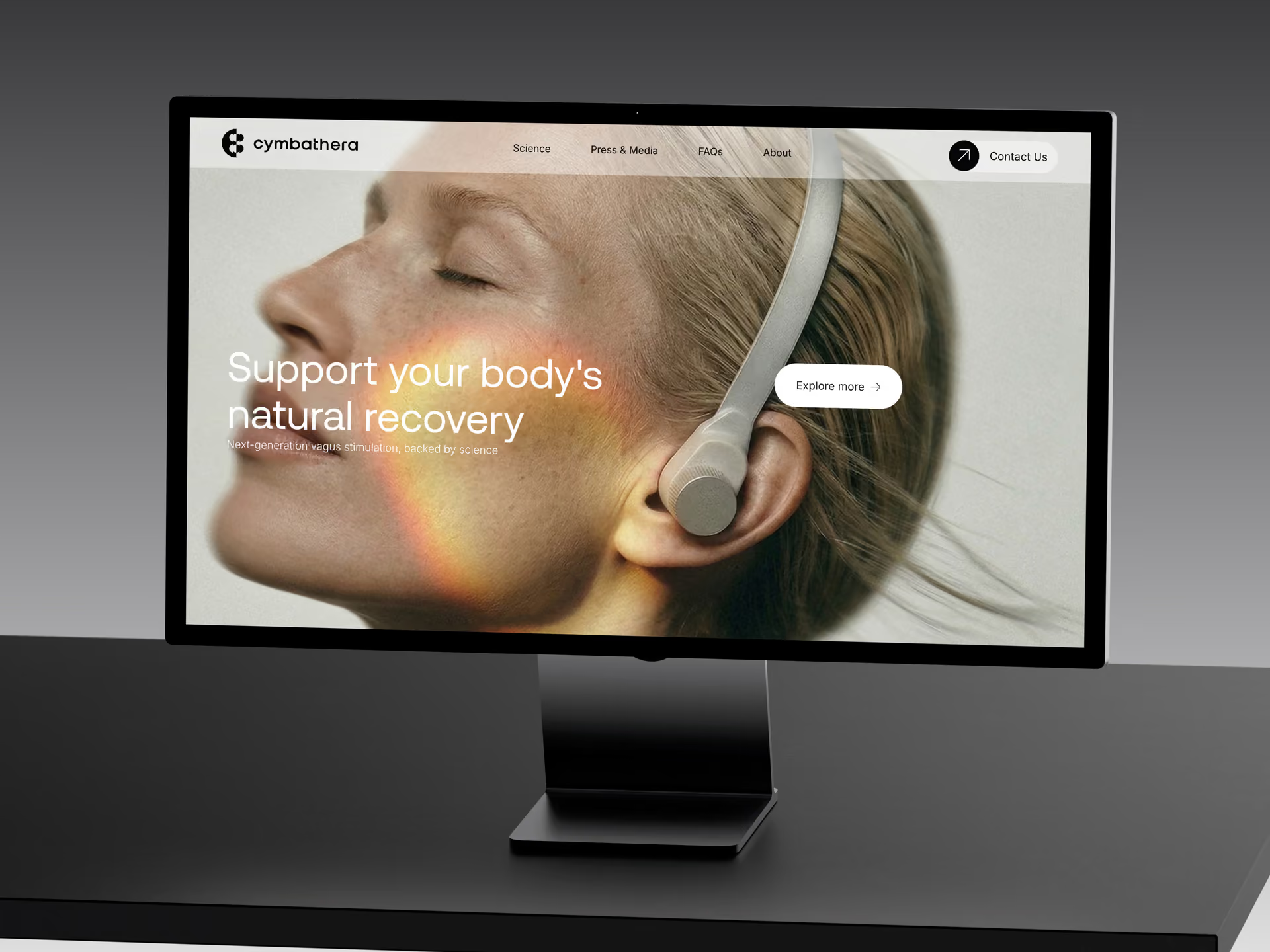
- Scientific authority without losing readability. Google treats health-related content as YMYL and, according to Google Search Central, holds it to a higher standard of E-E-A-T – the same signals determine whether AI assistants cite you. We recommend a publications collection in the CMS, author profiles for founders, researchers and medical advisers, and a clear dividing line between what the research shows and what the product is intended for. Readability comes down to order: the answer first, then the mechanism, then the references. For Cymbathera, founded by two internationally cited researchers in inflammation and vagus nerve stimulation, that was exactly the balance the website had to strike.
- Three audiences on the same website. Clinicians want to know the indication, evidence and use; procurement officers want certificates and regulatory status; investors look for milestones, publications and the team. Each audience gets its own entry point – but the product description is drawn from the same fields everywhere, so an investor page never describes the product more favourably than the product page does. There is more on structuring a website for a buying committee on the page about our B2B web design agency.
- Several markets, regulatory status per market. The product's status can differ between markets: CE marked in the EU but not yet approved in the US, or approved for different indications. What can be said therefore differs by market, not just by language. We keep language and market separate in the CMS model – language governs translation, market governs which products, claims and documents are shown – and set hreflang, URL structure and instructions for use per language before the build, so a new market becomes an editorial task, not a new web project.
Webflow or a coded website with a headless CMS for medtech?
Both tracks work for medical technology companies; the choice depends on the volume of documents, the approval workflow and system integrations. We recommend Webflow when the marketing department will do its own publishing, the volume of documents is manageable and approval can be handled with roles, locked fields and preview on staging – that is how both Suturion and Cymbathera are built. We recommend a coded website with a headless CMS when the document library is large and version-controlled, when the workflow requires a traceable history per field or when the website needs to pull data from your own systems. On that track, structural changes require code; if you have no developer of your own, a maintenance agreement is often a good idea, and if you do, they can take over completely. On the first call, we compare the two tracks on total cost in year one and year three.
How much does a medtech website cost?
It depends on the number of collections rather than the number of pages: products, documents, publications and profiles are separate page types that have to be modelled and built. Multiple markets, a formal approval workflow and integrations with your own systems add to the cost. If you already have a finished design and a complete register of approved wording, the project is smaller. We give you a fixed price after a free call, and there is a calculator in our guide to what a website costs.
Can the website be built for several markets, for example the EU and the US?
Yes, if the structure is planned for it from the start. We keep language and market separate in the CMS model: language governs translation, market governs which products, claims and documents are shown. That way, the product's regulatory status can differ between markets without you needing parallel websites. We set hreflang and URL structure per language from the start, so a new market becomes an editorial task rather than a new build.
HOW IS YOUR PRODUCT DESCRIBED TODAY?
Book a free call, or request a quote directly. We look at how your product is described on the website and in AI answers, whether the documentation can be found and whether Webflow or a coded website with a headless CMS is the right track for your approval workflow – before you order anything.