

B2B WEB DESIGN AGENCY FOR COMPANIES THAT SELL TO BUSINESSES
SEOS Design is a B2B web design agency in Stockholm that builds websites for companies selling to other businesses. We plan each website for a long buying journey, where several people read up before anyone gets in touch: pages that answer every question the buying committee has, lead flows connected to your CRM and a structure with room for more languages and markets.
A B2B website from SEOS Design
- Suits B2B companies with a product or service that needs explaining and a sales cycle of weeks to months – whether a couple of people in your marketing team own the website themselves or you want ongoing outside help with running the whole website.
- You get a page structure planned for the whole buying committee: pricing model, integrations, security, comparisons and case studies as separate collections.
- Forms and lead flows connected to your CRM, for example HubSpot or Salesforce.
- A website structure built for growth, so you can add more languages, markets or products efficiently.
- We usually build in Webflow or as a coded website with a headless CMS. We analyse your needs – for example who will run the website and which integrations are required – and recommend a solution based on them. Ongoing help afterwards is optional, with no lock-in period.
Multilingual SEO
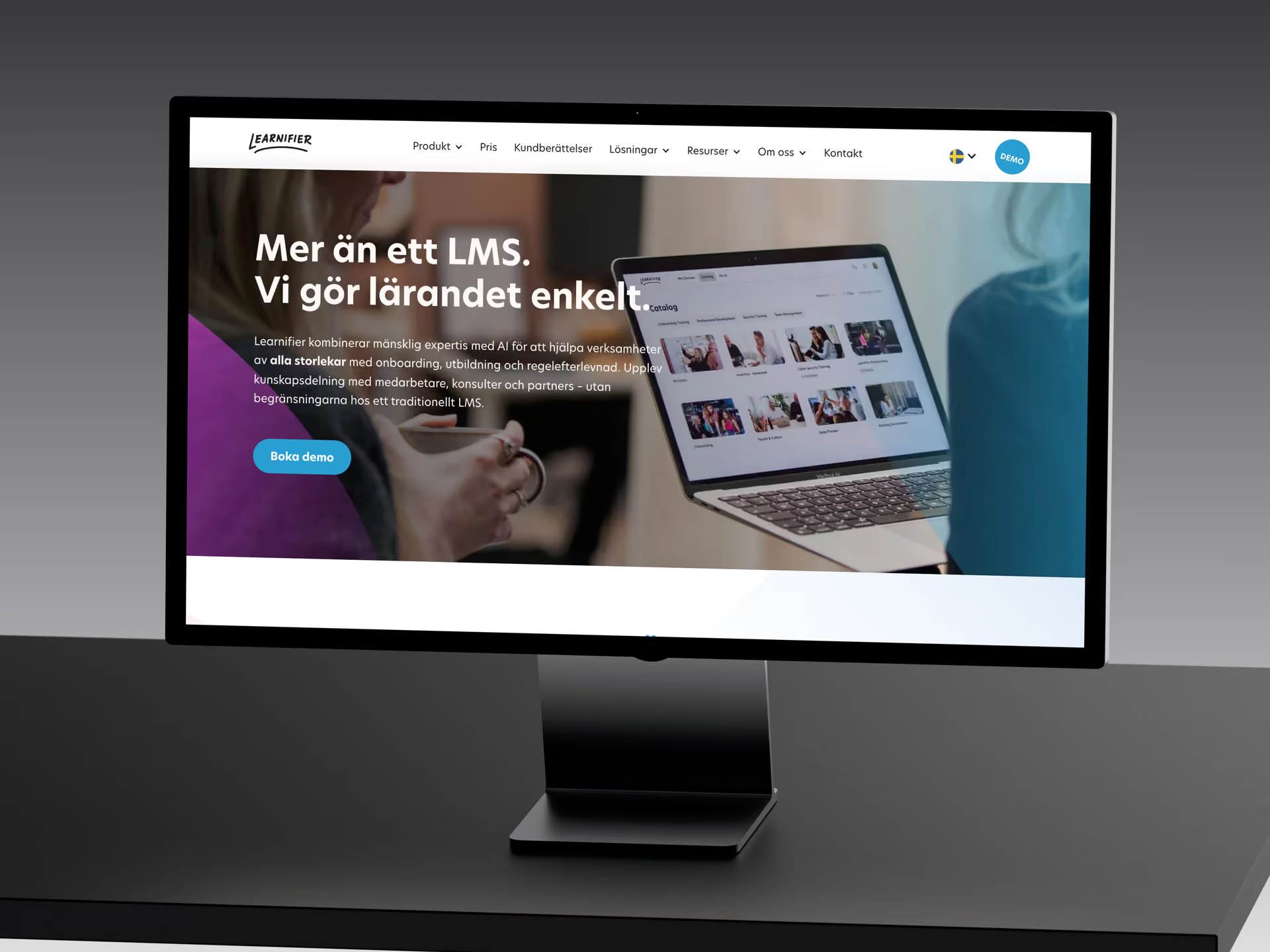
Learnifier – four markets in one CMS, better rankings and deals that started in AI assistants
4–6 weeks
typical project time from brief to launch
Long partnerships
ongoing development in everything from finance to medtech
BUILT FOR A BUYING JOURNEY THAT TAKES TIME
A B2B website is part of our web development service, but the structure has to meet different demands. It has to answer questions from several roles, qualify leads before they reach sales and cope with an offer that expands into new markets and languages. We plan that structure before design starts and build it in Webflow or as a coded website with a headless CMS – depending on who will run it and what it needs to connect to.
The build also lays the foundation for being found: the pages that answer the buying committee are the same pages that should rank in Google and be cited by AI assistants. We cover ongoing search work separately on the B2B SEO agency page.
What is includedWebflow websites · Headless CMS · Landing pages · CRM integration · Integrations · Conversion rate optimisation
FROM BUYING JOURNEY TO A LEAD IN YOUR CRM
We weren't looking for an agency that would just deliver a website – we were looking for a digital partner. SEOS Design built the website, set the tone of voice and now runs all of our SEM work. Having everything in one place, with a skilled and innovative team that owns the whole picture, has made an enormous difference to pace and quality. We couldn't be happier!
 Emil GlenngårdFounder, TillväxtstödTranslated from Swedish
Buying journey and roles
We start by interviewing you about the business and your customers. Sales and customer service are the most important sources: which roles are involved in a typical deal, what do they ask, where do deals usually stall – and which questions does your support team get most often? The answers shape the page structure and the content – not a template.
Structure and choice of platform
Before design starts, we decide which page types the website needs, what should be reusable and how languages and markets should fit together. Based on who will publish content and which systems the website has to connect to, we also recommend a build track – Webflow or a coded website with a headless CMS. The choice is yours.
Design, build and CRM integration
We create a unique design based on your brand guidelines, and you approve a clickable prototype before the build starts. A solid technical SEO foundation is always included. Forms and lead flows are connected to your CRM and tested right through to a lead being created. Usually 4–6 weeks from brief to launch.
Launch, training and handover
We help you point the domain to the new website and publish it. If you like, we set up tracking and train your team so you can manage the website yourselves. An ongoing agreement with us for maintenance, further development and SEO is optional – and, of course, comes without a lock-in period.
What does a B2B website cost?
fixed price before we start
The price is set by what your website actually needs. Below you will find price indications and examples of websites at each level.
The price of a B2B website is rarely driven by the number of pages, but by the number of page types, integrations and languages – and by how much of the strategy is already in place and how much you want to invest in SEO. We can answer all of that on the first call, and you always get a fixed price before anything is built. Below are some example price levels. To work out the cost of building and owning the website over time, use the calculator for what a website costs to build and own.
Always included – whatever the level
Every website we build, whatever the price, is built on strategy, has a custom design and meets the same technical standard.
- Strategy before design
- Custom design
- Always a solid SEO foundation
- You own the account, the code and the content
01
Landing page or small website
SEK 25,000–45,000 (≈ €2,200–4,000)
A landing page, a campaign page or a small website where the brand identity and copy already exist.
SEK 25,000–45,000 (≈ €2,200–4,000)
Landing page or small website
Examples that tend to land here
- A landing page for a campaign or a service.
- A small website on your existing visual identity, with your own copy and images.
02
Website on an existing strategic foundation
SEK 50,000–85,000 (≈ €4,500–7,600)
A complete website when the logo, direction and message are there to build on.
SEK 50,000–85,000 (≈ €4,500–7,600)
Website on an existing strategic foundation
Examples that tend to land here
- A normal-sized website with a blog or case studies: page structure, custom design, build and an SEO and AEO foundation.
- A small website where we start from scratch – message, structure and material developed together with you.
03
Website with strategy and content
SEK 90,000–135,000 (≈ €8,000–12,000)
When the message, the copy or an SEO effort needs to be done before the build.
SEK 90,000–135,000 (≈ €8,000–12,000)
Website with strategy and content
Examples that tend to land here
- A mid-sized website with strong branding, plus a one-off SEO effort: keyword research, page structure and copy.
- A website where the message and tone of voice are developed in a workshop with several stakeholders on your side, before anything is designed.
04
Larger or more complex website
From SEK 140,000 (≈ €12,500)
Large websites, several languages, custom integrations or a rebuild where the search visibility has to come along.
From SEK 140,000 (≈ €12,500)
Larger or more complex website
Examples that tend to land here
- A rebuild of a larger website that ranks: URL mapping, redirects and a new search strategy.
- A multilingual website, or integrations with your own systems.
Every level can include strategy, copy, SEO and migration. A small website where we start from scratch can cost more than a larger one where the groundwork exists – it is the scope that decides, not the size. Prices exclude VAT; the euro figures are approximate.
What affects the price of a website?
Ten things, and all of them can be answered in a first call.
- The starting point – do the logo, message and copy exist – or are we starting from scratch?
- Strategy – how much help you need with positioning, message and structure before anything is designed.
- Number of page templates – not the number of pages. Five pages on one template is less work than five templates.
- Copy – how much we write, compared with what you supply.
- Design – following your existing identity, or developing it – and whether images, illustrations or animations need to be produced.
- SEO and AEO – the technical foundation is always included. An SEO effort with keyword research, SEO copy and schema markup is an add-on you choose.
- Languages – one, or several from the start.
- Integrations – with a CRM, a booking system or your own systems.
- Migration – twenty URLs to move, or a hundred and sixty.
- Build track – Webflow or a coded website with a headless CMS.
Describe what you need in an enquiry, or book a first call with us – we will get back to you quickly with a fixed price, before anything is built.
Your own team can run the website easily, by hand in the CMS or with AI. If you want ongoing help, we are there, with no lock-in period.
Selected projects



Common questions for a B2B web design agency
What sets a B2B website apart from a B2C website – in practice?
A B2B website rarely sells in a single visit. It is read by several people, on several occasions and with different questions, before any of them gets in touch. A B2C website is built for a decision here and now. A B2B website is built to hold up through weeks of internal evaluation.
The pattern is the same in most industries. The person who finds you first is rarely the one who decides. The link gets passed to a colleague who owns the budget, another who will use the solution and a third who has to assess security or contracts. Each of them reads what relates to their own question, comes back a few times and compares you with two or three alternatives. We describe the whole buying journey in the section on the B2B buying journey. Here, the focus is on what that pattern means for the build.
- Every page has to stand on its own. Someone who is sent a link by a colleague has not seen the homepage. Every service and product page needs its own context: who it is for, what problem it solves, what is included and what the next step is.
- Navigation follows the buyer's problem, not your organisation. Menus that mirror departments force visitors to understand you before they understand the offer. We recommend a structure based on use case, role or industry.
- Qualification works both ways. Buyers want to judge for themselves whether you are relevant before they contact you. You want to know whether a lead is worth researching thoroughly before a sales call. Content and forms are designed for both.
- Evidence outweighs gut feeling. Specifications, case studies and clear terms do more for the decision than an impressive homepage.
If you are a startup selling B2B, the same pattern applies, except that the offer is often still taking shape. We describe that way of working on the web agency for startups and scaleups page.
Which pages does a B2B buyer look for – and rarely find?
Most B2B websites describe the company well and the buying decision poorly. The pages that decide the evaluation – pricing model, integrations, security, comparisons and case studies by industry – are often missing entirely, or sit in a PDF behind a form. We recommend planning them in before the design starts, because they determine what the CMS model should look like.
- Pricing model. Not necessarily a price list, but an explanation of what drives the price: number of users, volume, licence and implementation. Buyers need to be able to place you in the right price bracket without booking a meeting.
- Integrations. One page per system you connect to, with what is synced and in which direction. It is often the most specific search a technical evaluator makes.
- Security and compliance. Where data is stored, how personal data is processed, which agreements and certifications are in place. The person who has to approve the supplier looks for this page late in the process – and can stop the purchase if it is missing.
- Comparisons. Your solution against the alternatives the buyer is considering anyway, including carrying on as they are.
- Case studies by industry. Buyers look for companies like their own. Case studies that can be filtered by industry and size do more good than a long list.
- Who we are not a fit for. Being honest about where you draw the line saves both sides time and makes everything else you claim more credible.
The same information is also invaluable to search engines and AI assistants when they put together their answers.
Do we need to show prices on the website?
You do not need to show a price list, but you should explain the pricing model: what drives the price, which costs are one-off and which are recurring, and roughly what size of customer you are aiming at. A B2B buyer who cannot tell whether you are in the right price range often moves on to a competitor who is clearer. If there are reasons not to publish figures – negotiated agreements, wide variation between customers – a worked example for a typical customer is often enough.
What makes a B2B website more expensive than an ordinary company website?
Two things – the strategy work before the build and the number of page types. A B2B website has to work for a whole buying committee – the person who evaluates the technology, the one who runs the numbers on the deal and the one who signs off. Understanding them and giving them the right answers in the right order takes more analysis of messaging, page structure and content than an ordinary company website. The build adds page types such as integrations, case studies with industry filters, pricing model and language versions, and the CRM connection has to be tested right through to a lead being created. A company website with five static pages has none of that. If you want to run the numbers yourself first, you will find price ranges for each build track and the calculator for what a website costs to build and own. We give you a fixed price after a call.
How long does it take to build a B2B website?
Usually 4–6 weeks from brief to launch. If you need to go live faster, we can fast-track the launch in 2–3 weeks with a limited scope and frequent check-ins. What stretches the timeline in B2B is rarely the technology but the decisions: which roles the website should speak to, what can be said about the product and who signs off the copy. If you have those answers, or someone who can make those calls quickly, the schedule holds. CRM integration and extra languages are planned in from the start so they do not turn into a separate project later.
How is the lead flow connected to our CRM – from form to Salesforce or HubSpot?
A B2B form should not end up in an inbox. It should create a lead in your CRM, for example HubSpot or Salesforce, with the right fields filled in – so sales can act the same day and you can see later which page the deal started on. We build the flow as part of the website, not as an afterthought.
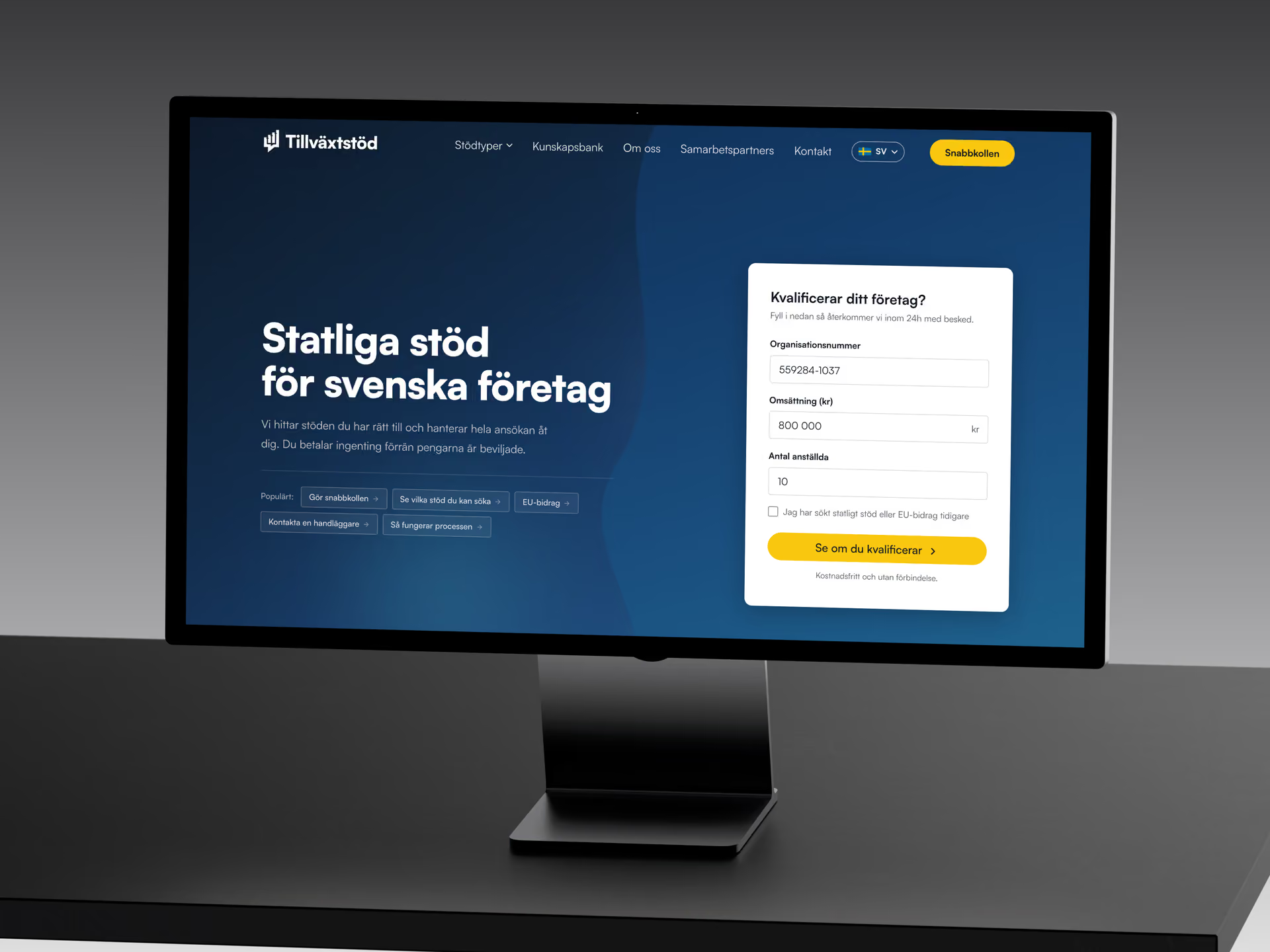
For Tillväxtstöd, we built multi-step forms connected to Salesforce, with real-time validation of Swedish company registration numbers; qualified leads go straight into the system. The principle is simple: ask for little in the first step, more once the visitor has shown they are serious, and validate whatever can be validated automatically before the lead is created.
How the integration is built depends on the track: in Webflow, through ready-made integrations or an automation layer; in a coded website, directly against the CRM's API, which gives more options for validation and rule-based routing – deciding which salesperson gets the lead, for example. The first known landing page is recorded on every lead, so the website can be evaluated on leads rather than clicks.
Can the website be connected to our CRM?
Yes. We connect the website to the CRM you already have – for example HubSpot or Salesforce, or another system with an open API. The principle is the same: the form creates a lead with the right fields, the first landing page is recorded and sales gets notified. In Webflow, the connection runs through ready-made integrations or an automation layer; in a coded website, directly against the API. If your system has limitations, we tell you before we promise anything.
Webflow or a coded website – and how do we plan for more languages from the start?
We start from your needs. Webflow is often the right fit when the marketing department will own publishing and the integrations are standard. A coded website with a headless CMS fits when the website has to pull product data from business systems or needs custom integrations, or when performance is a selling point in itself. Tillväxtstöd was built as a coded website in Next.js with Sanity, because the form flow to Salesforce required it. The choice is yours – we make a recommendation once we know more about your needs.
The economics differ. With Webflow, the one-off price covers the whole value – you publish, build pages and adjust content without us. A coded website is often cheaper to build, but structural changes require code. If you have your own developer, they can take over completely; otherwise it is often a good idea to keep us available when needed, with no lock-in period. That is why we compare the tracks on total cost in year one and year three, not just on the quoted price. We describe what the Webflow track includes on the Webflow agency and Webflow development page.
Whichever track you choose, if you plan to sell across the Nordics or in English, the website is planned for more languages from the start: every page carries its language versions, the URLs have room for more languages and hreflang is set automatically. Learnifier's website was built in Webflow and runs in four languages from a single CMS. With that in place, adding a language is an editorial job, not a new web project.
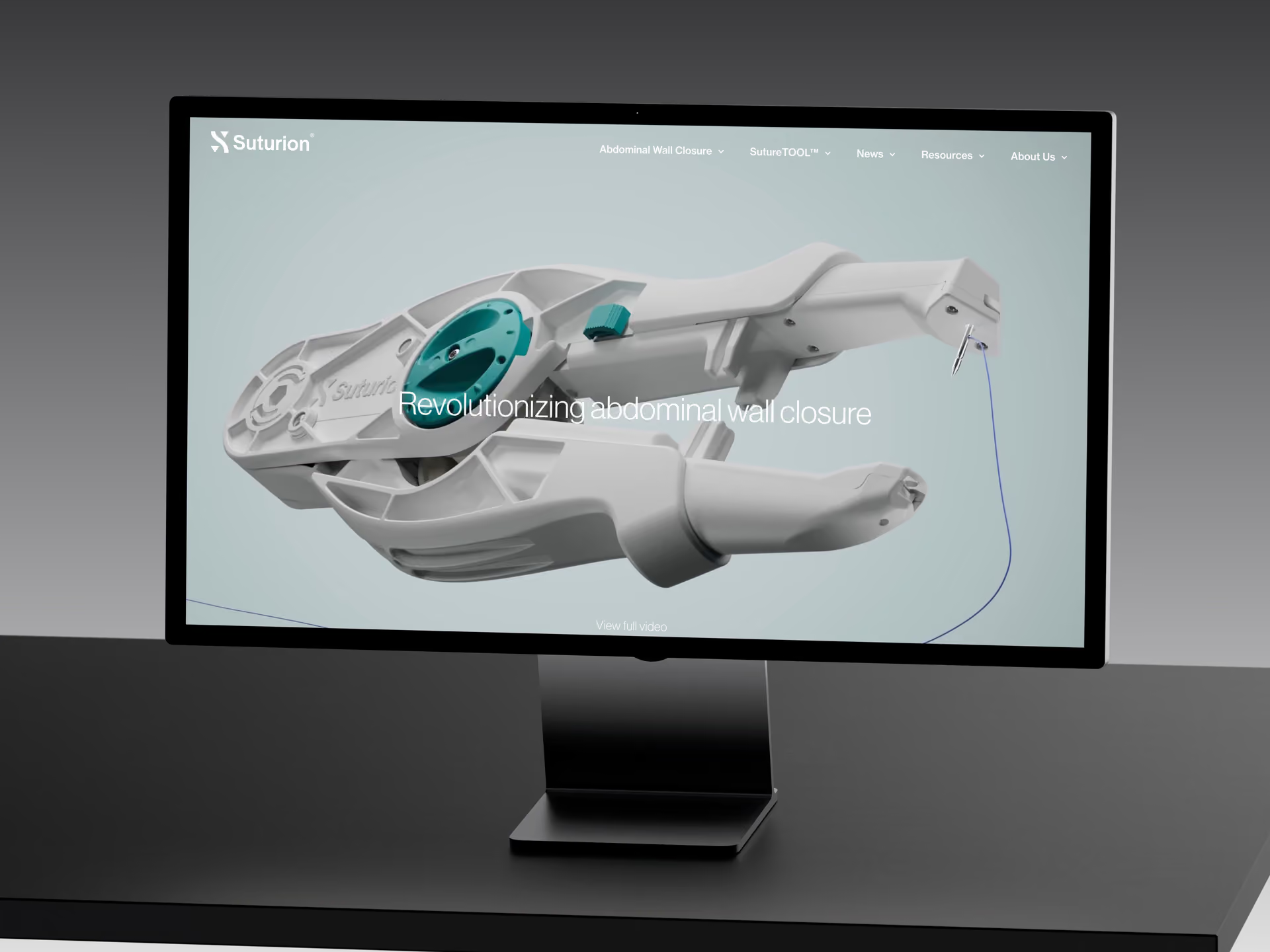
If you sell in a regulated industry, there are extra requirements for how copy is reviewed and approved before publication. For the medtech company Suturion, that partnership has been running since 2024; we describe how we work on the medtech web agency page.
We have no in-house developer – can we still choose a coded website with a headless CMS?
Yes. You edit content, pages and images yourselves in the CMS, much as in Webflow. Structural changes are what need a developer: new page types, new fields, new integrations. If you have your own developer, they can take over completely; otherwise a maintenance agreement, with no lock-in period, is often a good idea so that help is on hand when you need it. If you want to make every change yourselves without any developer at all, Webflow is often the best fit. We give you a recommendation on the first call.
Can we add more languages later, or does everything have to be there from the start?
You can add them later. The website is planned from the start so it is easy to build on – a new language slots into the same structure, with its own URLs and correct hreflang set automatically, and nothing has to be rebuilt.
Is SEO included when you build a B2B website?
A solid technical SEO foundation is always included: clean HTML and URL structure, metadata and performance that meets Core Web Vitals. It is the same foundation that makes the content readable for AI assistants.
What you can add is the work on top of that foundation: keyword research weighted towards purchase intent, a page structure built around buyer-intent keywords, SEO copy for the pages that support the buying decision, and schema markup. It is best done alongside the build, when structure and copy are being produced anyway – but starting after launch works just as well. We describe how we work with B2B searches that have low volume but high purchase intent on the B2B SEO agency page.
Why does AEO matter for B2B – and what do you do about it in the build?
More and more buyers start their research in ChatGPT, Claude or Google's AI Overviews: which suppliers are out there, what do they cost, does the product meet a particular requirement? The assistant answers with whatever it can read about you. If the information is not openly available on your website, the answer is in effect no – and you drop out before you even knew you were being evaluated.
That is why we build B2B websites so the answers can be retrieved: integrations, security, pricing model and compliance as standalone, citable passages under question-style headings, and a consistent description of the company on the website and in external profiles, so that you come across as a clear entity. We explain how the buying committee uses AI in its research in the section on AEO for B2B, and our general approach to AI visibility under AI visibility and AEO.
How do you keep our tone of voice consistent when SEO content has to be produced at pace?
With a context file. It brings together your tone of voice, the facts about your product and prices, the wording you have approved and the phrases you never want to see – and every draft, ours or yours, starts from it. AI provides the pace in research and drafting; a specialist on our side decides what to write and reviews everything before you approve it.
You can use the same context file for everything else you write – LinkedIn, sales material, newsletters – so that the website, sales and marketing sound like the same company. That is how we work with SEO copy, and the context file is yours to keep when the partnership ends.
HOW DO YOUR BUYERS READ YOUR WEBSITE?
Request a quote directly, or book a free call. We go through what your buying journey looks like today, which pages the buying committee looks for on your website but cannot find, and whether Webflow or a coded website with a headless CMS is the right track – before you order anything.