

WEBSITE DESIGN FOR STARTUPS AND SCALEUPS
SEOS Design is a web agency for startups, scaleups and growing companies. Our startup website design covers the whole website – messaging, design, build and an SEO/AEO foundation – even if all you have is a pitch deck. We start with the questions that make sure your technology and your offer are described correctly – to customers, investors and AI.
Who we are a good fit for
- You are a startup building everything from scratch – messaging, brand, website – or a scaleup that has a lot in place but wants structure, a more considered website and more capacity for effective marketing.
- You are an innovative company – perhaps with a technology- or research-driven offer that has to be explained correctly without losing its edge: medtech, cleantech, SaaS or fintech.
- Your starting point can be a pitch deck – or a finished brand book and design. We start from what you have and fill the gaps.
- You have a tight deadline and need a professional website up quickly ahead of a product launch, trade fair or funding round.
- You need a website with a well-thought-out structure that is easy to build on as you grow – more languages, careers pages, integrations – and that you can manage yourselves afterwards.
4–6 weeks
from brief to launch – for urgent deadlines we fast-track the launch with a clear plan for version 2.0
Fixed price
before anything is built – set by scope, not by a standard price list
0 months
minimum term on ongoing support after launch
ONE PARTNER FOR THE WHOLE WEBSITE
A growing company rarely has the time or the people to coordinate three suppliers for messaging, design and build. We handle the whole chain: messaging and structure, design, a build in Webflow or as a coded website with a headless CMS, a technical SEO and AEO foundation, and launch. After launch, you run the website yourselves – or we look after it for you on an ongoing basis. Each part is described separately under web design and web development.
At this stage, what decides the outcome is whether someone asks the right questions early: what the technology actually does, who needs to understand it and what the website must handle when the company is twice the size. Those answers drive page structure, tone and choice of platform – in that order.
What's includedWeb design · Webflow websites · Headless CMS · Messaging and copy · Technical SEO · AEO
FROM QUESTIONS TO A WEBSITE THAT GROWS
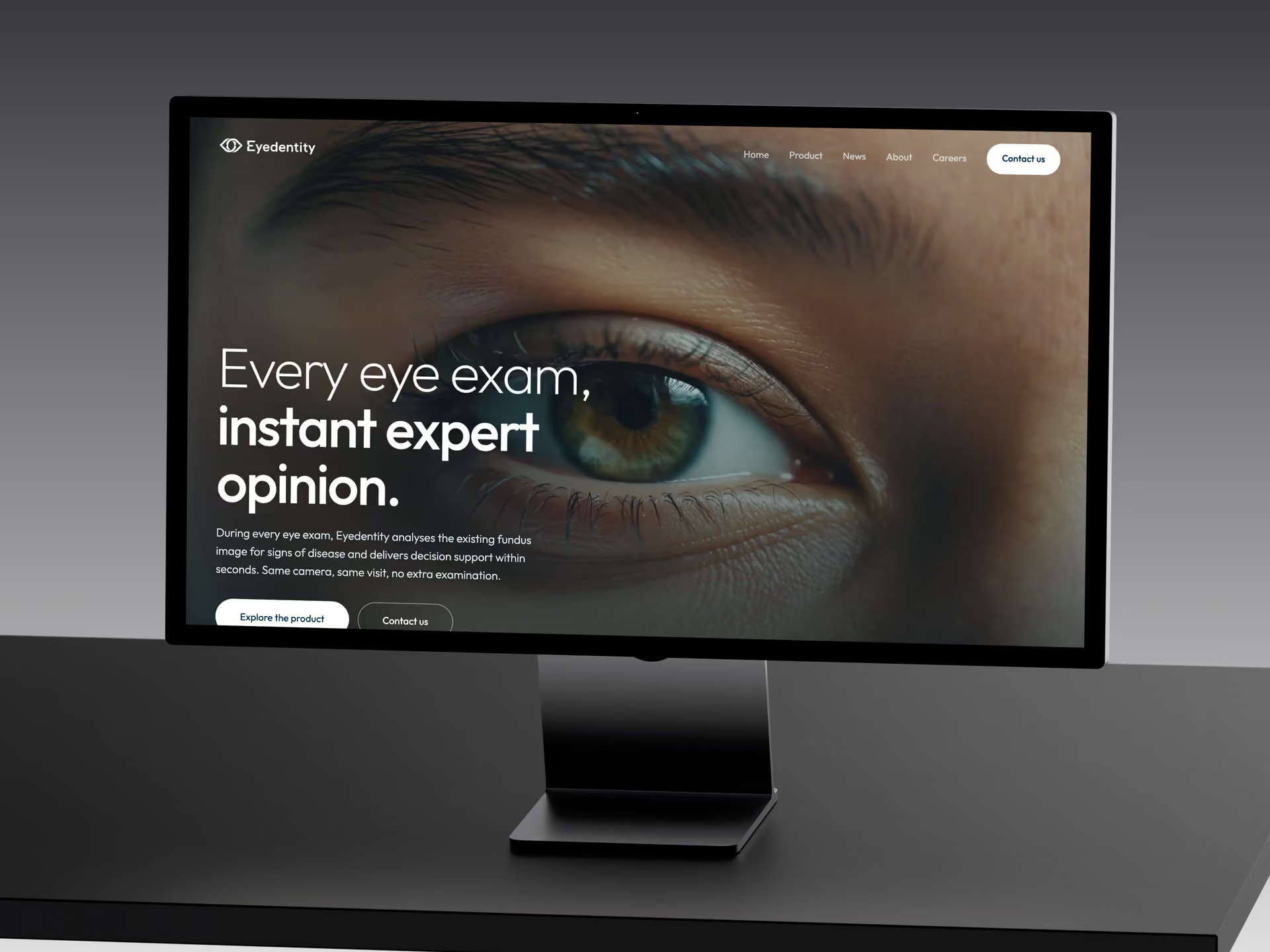
We are a fast-growing startup that came to SEOS with a tight deadline. In a short time, they had to turn our brand book into a professional website. They asked the right questions and quickly got to grips with both our technology and what we wanted to say. In under three weeks they launched a website where the message, design and animations explain Eyedentity and what we do in the right way.
 Per IninbergsCOO & Co-Founder, EyedentityTranslated from Swedish
Questions and starting point
We go through your business, technology, audience and next steps, and take stock of what already exists – logo, pitch deck, brand guidelines or design system. Only then do we recommend a platform: often Webflow, a coded website with a headless CMS, or Shopify.
Messaging and structure
We define the messaging structure and tone of voice first, then the page structure, URL plan and CMS structure. Everything is planned so that future additions – more languages, careers pages, investor pages – are efficient to make, without you paying for them today.
Design and build
We create a unique design from what you have – from a pitch deck to a finished brand book or design file – and you approve a clickable prototype before the build starts. A solid technical SEO foundation is always included, and performance is measured against Core Web Vitals before launch.
Launch and growth mode
We help you point the domain and publish, and if you like, we set up analytics and train your team so you can manage the website yourselves. If you have your own developer, you take over completely; otherwise an ongoing agreement with us is optional – with no lock-in, of course.
What does a website cost for a growing company?
fixed price before we start
The price is set by what your website actually needs. Below you will find price indications and examples of websites at each level.
The price depends not on the size of the company but on how much has to be solved before the build can start. Below is a quick overview of prices for different kinds of website. We cover what affects the price in more detail on the page Price for a new website. Ongoing support after launch is optional and has no lock-in.
Always included – whatever the level
Every website we build, whatever the price, is built on strategy, has a custom design and meets the same technical standard.
- Strategy before design
- Custom design
- Always a solid SEO foundation
- You own the account, the code and the content
01
Landing page or small website
SEK 25,000–45,000 (≈ €2,200–4,000)
A landing page, a campaign page or a small website where the brand identity and copy already exist.
SEK 25,000–45,000 (≈ €2,200–4,000)
Landing page or small website
Examples that tend to land here
- A landing page for a campaign or a service.
- A small website on your existing visual identity, with your own copy and images.
02
Website on an existing strategic foundation
SEK 50,000–85,000 (≈ €4,500–7,600)
A complete website when the logo, direction and message are there to build on.
SEK 50,000–85,000 (≈ €4,500–7,600)
Website on an existing strategic foundation
Examples that tend to land here
- A normal-sized website with a blog or case studies: page structure, custom design, build and an SEO and AEO foundation.
- A small website where we start from scratch – message, structure and material developed together with you.
03
Website with strategy and content
SEK 90,000–135,000 (≈ €8,000–12,000)
When the message, the copy or an SEO effort needs to be done before the build.
SEK 90,000–135,000 (≈ €8,000–12,000)
Website with strategy and content
Examples that tend to land here
- A mid-sized website with strong branding, plus a one-off SEO effort: keyword research, page structure and copy.
- A website where the message and tone of voice are developed in a workshop with several stakeholders on your side, before anything is designed.
04
Larger or more complex website
From SEK 140,000 (≈ €12,500)
Large websites, several languages, custom integrations or a rebuild where the search visibility has to come along.
From SEK 140,000 (≈ €12,500)
Larger or more complex website
Examples that tend to land here
- A rebuild of a larger website that ranks: URL mapping, redirects and a new search strategy.
- A multilingual website, or integrations with your own systems.
Every level can include strategy, copy, SEO and migration. A small website where we start from scratch can cost more than a larger one where the groundwork exists – it is the scope that decides, not the size. Prices exclude VAT; the euro figures are approximate.
What affects the price of a website?
Ten things, and all of them can be answered in a first call.
- The starting point – do the logo, message and copy exist – or are we starting from scratch?
- Strategy – how much help you need with positioning, message and structure before anything is designed.
- Number of page templates – not the number of pages. Five pages on one template is less work than five templates.
- Copy – how much we write, compared with what you supply.
- Design – following your existing identity, or developing it – and whether images, illustrations or animations need to be produced.
- SEO and AEO – the technical foundation is always included. An SEO effort with keyword research, SEO copy and schema markup is an add-on you choose.
- Languages – one, or several from the start.
- Integrations – with a CRM, a booking system or your own systems.
- Migration – twenty URLs to move, or a hundred and sixty.
- Build track – Webflow or a coded website with a headless CMS.
Describe what you need in an enquiry, or book a first call with us – we will get back to you quickly with a fixed price, before anything is built.
Your own team can run the website easily, by hand in the CMS or with AI. If you want ongoing help, we are there, with no lock-in period.
Selected projects



Common questions from startups and scaleups
How does a web agency for startups differ from an ordinary web agency?
Pace, missing material and an offer that is still taking shape. An agency that works with startups and scaleups has to handle all three at once, without waiting for a finished brief.
The same website also has to work for customers, for investors who look you up after a meeting, and for job candidates. The messaging also changes between funding rounds – a website that only reflects today has to be rebuilt every time the positioning is sharpened.
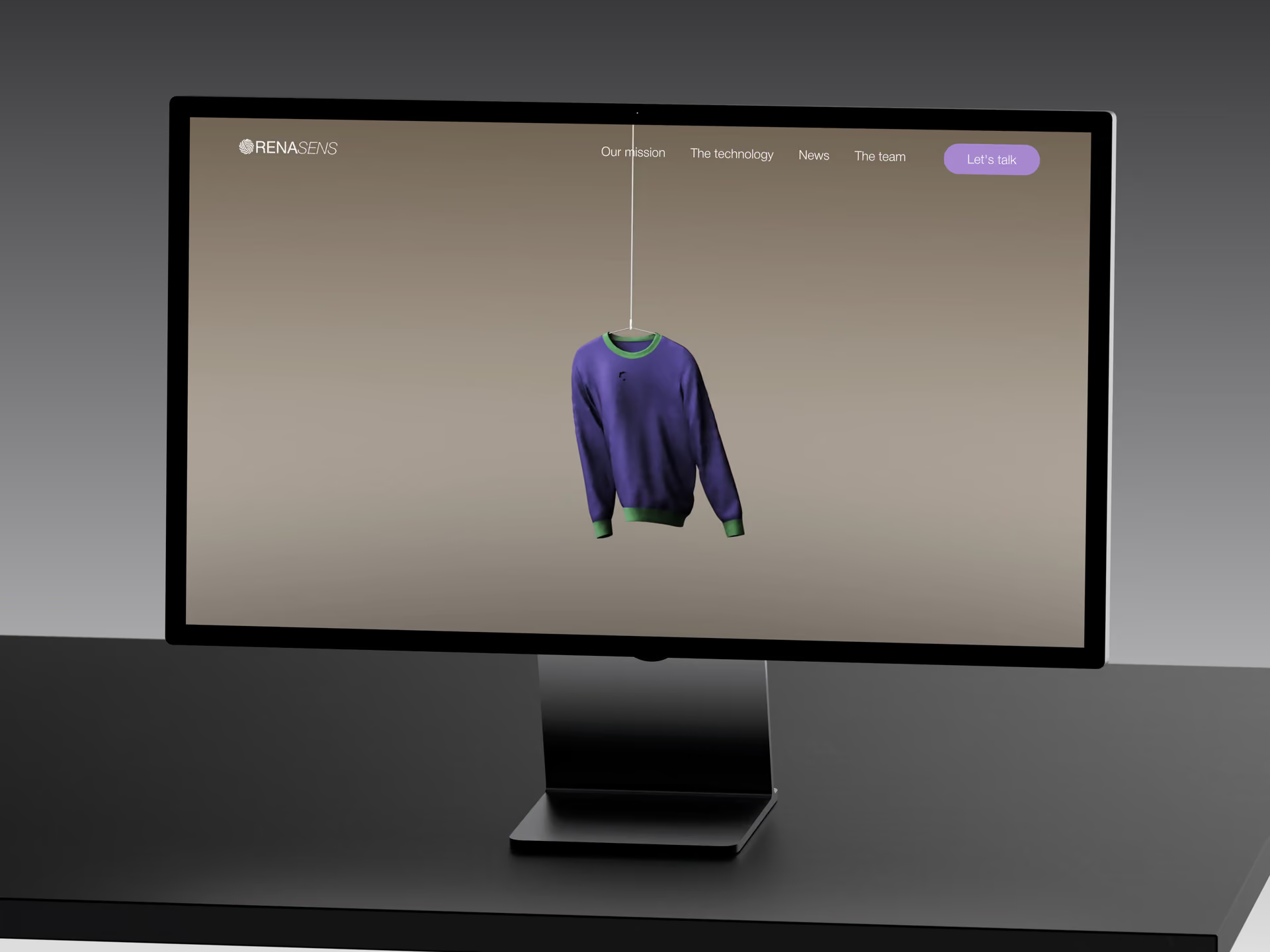
The hardest part is usually the language: a company building something new has no established vocabulary to start from. For Renasens, the job was to give a new industry a language before design was even on the table.
We are also rarely the only supplier on the project. A growing company often has other specialists involved at the same time – regulatory copy, messaging for end customers, a branding agency – and the material changes while we build. That is why we build so that structure and components can absorb late adjustments.
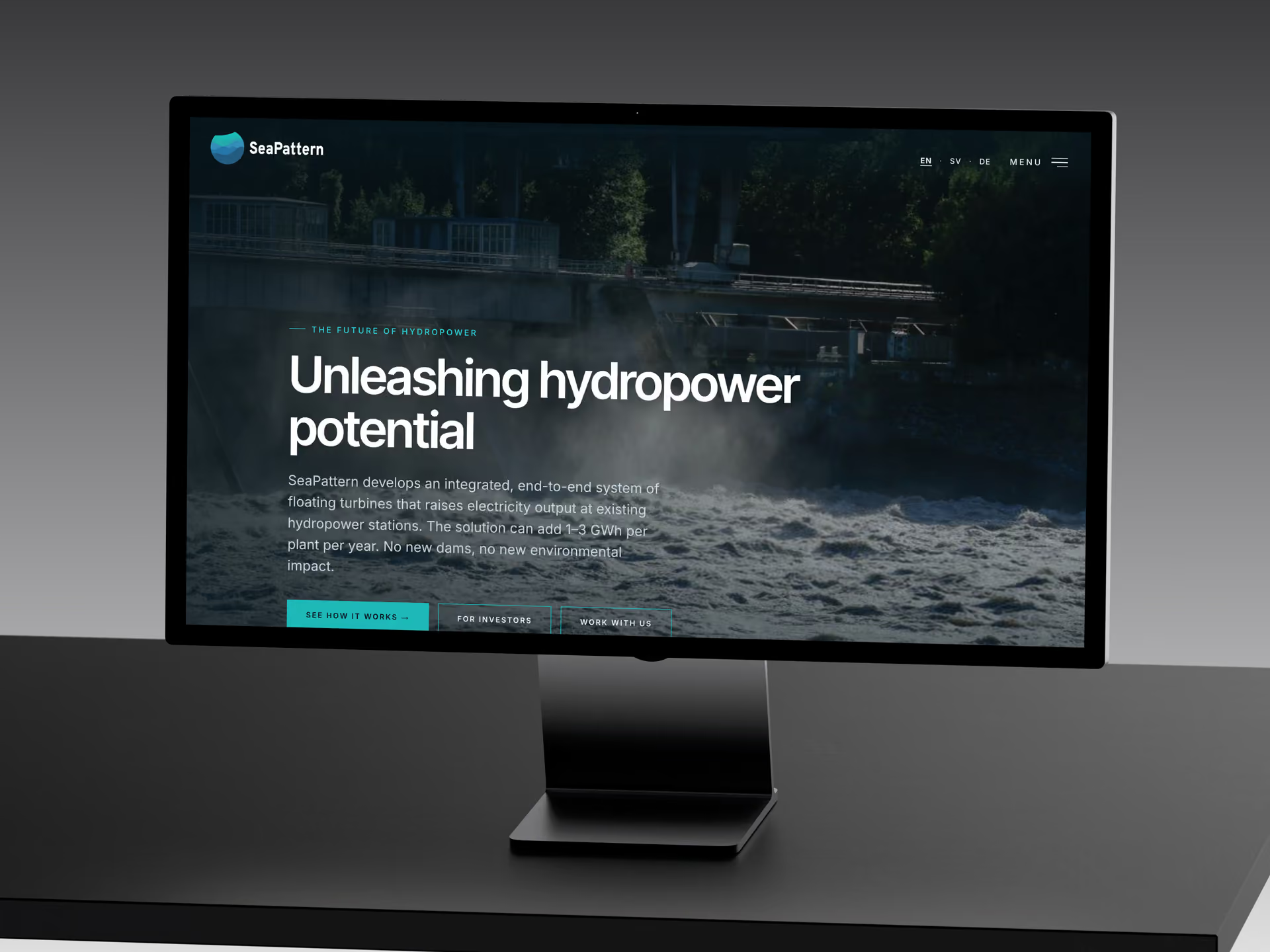
Several of our clients are early-stage, research-driven companies, such as Renasens and SeaPattern, where the technology has to be explained before it can be sold. We are based in Stockholm and work with companies wherever they are.
Which web agency is the best fit for a growing company?
The one that can do three things at once: articulate an offer that is not finished yet, build a website that holds up as the company grows, and put technical SEO and AEO structure in place from the start. Ask agencies how they work when the material is incomplete, who owns the website afterwards and what happens if you want to change agency. The answers to those three questions tell agencies apart better than their portfolios do.
Have you worked with deeptech and research-driven companies?
Yes, it is a recurring type of project for us – Renasens and SeaPattern are two examples. What these projects have in common is that the technology is new and there is no established language to describe it. We also work in medtech, where wording is governed by regulation – examples include Cymbathera, Suturion, a partnership that has run since 2024, and Eyedentity, which analyses retinal images with AI and had its website launched in under three weeks.
Can you start from what we have – even if it is almost nothing?
You do not need a finished brief. Where you start determines how much has to be solved before the build – and therefore where the price usually lands.
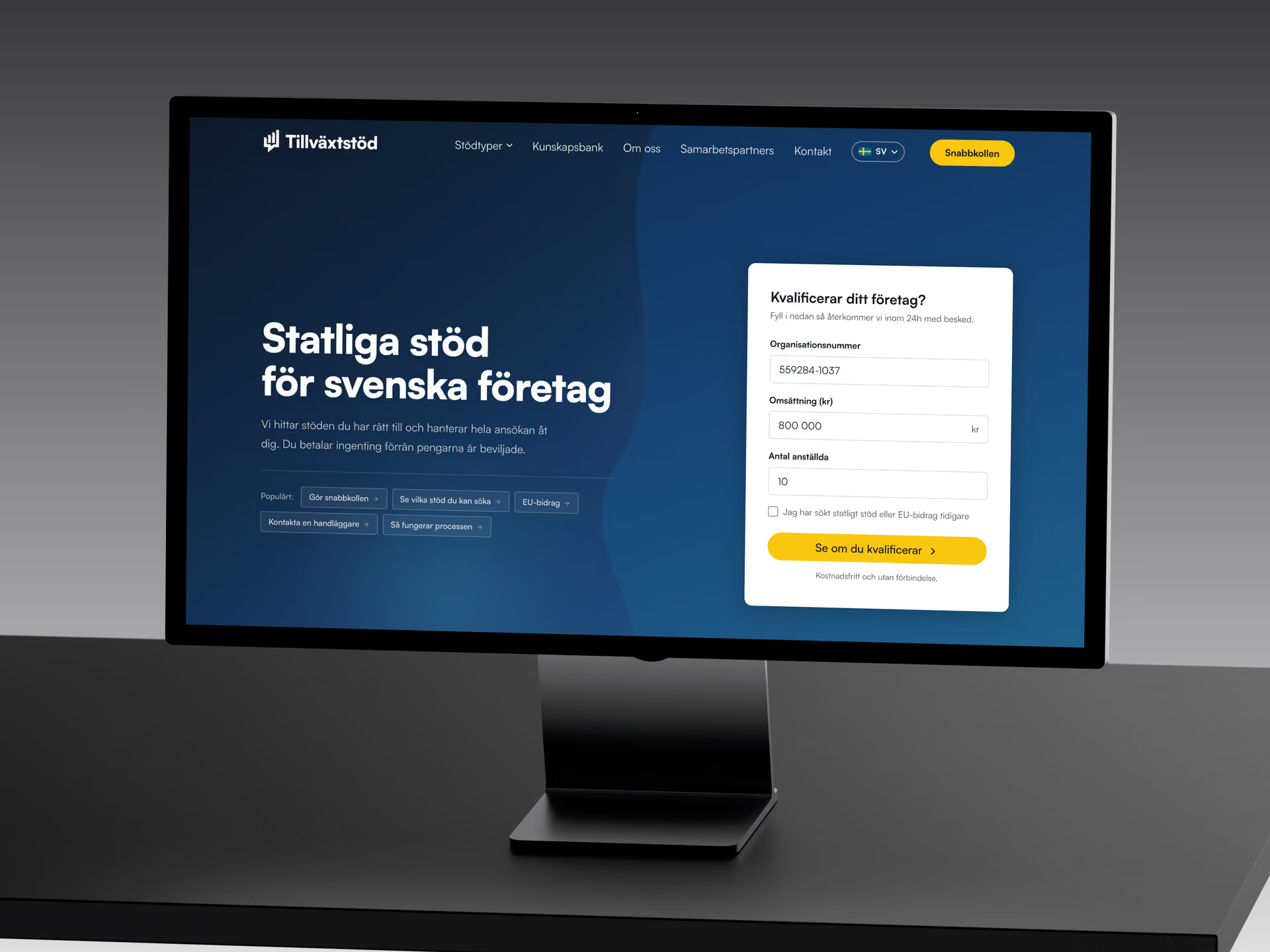
- If you only have a logo and a pitch deck – no image library, no tone-of-voice guide, no finished copy – that is enough to start with. We create messaging structure, tone of voice, visual language and copy from scratch; the pitch deck is often the only place where the offer is stated plainly. This is the larger project, because the work before the build outweighs the build itself. Tillväxtstöd started with a logo and a pitch deck.
- If you have brand guidelines and sketches, there is a visual direction, but not a complete system. We consolidate what has been decided and fill the gaps. If you can already explain what you do, it is a smaller job: a website on an existing strategic foundation.
- If you have a finished design system in Figma, we build to the design exactly, with the right component structure and a CMS model for the content. Cymbathera is an example. The visual side is already solved, which lowers the price.
The difference between the starting points shows in time and price, not in ambition.
The hardest case is when there is nothing to show: the product is software and the interface is not ready. Then we create the visual language – animations that explain the technology instead of showing it, and our own images, often AI-generated but refined by hand. That is what we did for Eyedentity.
The pace is usually set by a date: a launch, a trade fair, a demo day or a funding round. A project normally takes 4–6 weeks from brief to launch. If you need to go live faster, we can do a fast-track launch in 2–3 weeks with a limited scope and frequent check-ins. If you have a fixed date, we plan backwards from it.
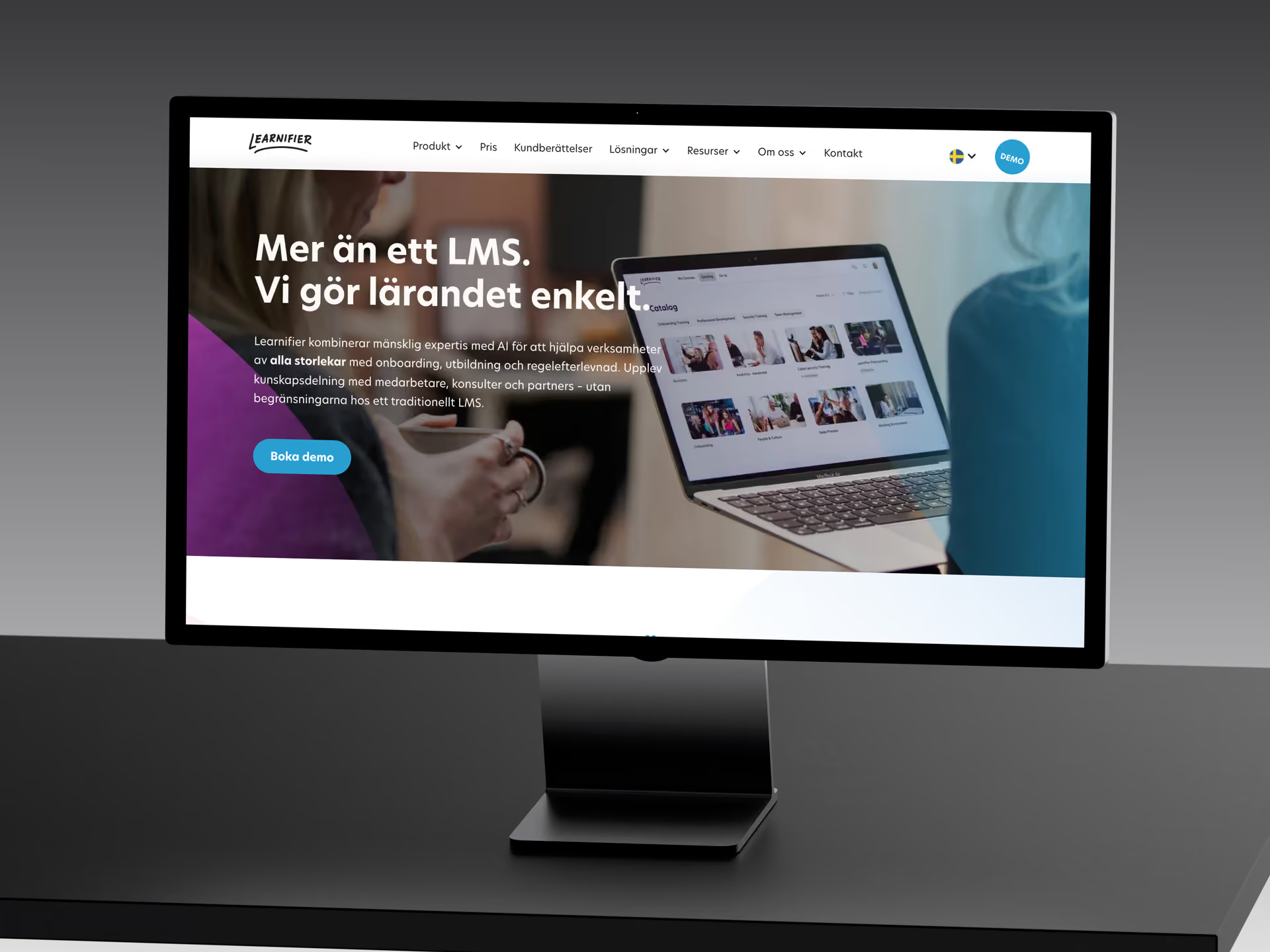
At the same time, we plan the website for the next stage without building it in advance. The CMS model is prepared for languages and page types that do not exist yet, so a new language or a careers page becomes a publishing task rather than a new project. Learnifier's website runs in four languages in a single CMS because the language structure was set before the build. For Tillväxtstöd, we built a multi-step form feeding into Salesforce, with real-time validation of Swedish company registration numbers. Things like that are cheap to plan for and expensive to add later.
What questions do you ask first – to capture our technology and our message?
Before we design anything, we ask questions like the ones below about business, technology, audience and next steps. The answers drive page structure, tone and choice of platform.
- Who needs to understand what you do within ten seconds – and what should that person do next?
- What does your technology do? And just as important: what does it not do?
- Which three objections do you hear most often in sales conversations?
- What is the buyer's alternative – a competitor, an in-house build or doing nothing?
- Which audiences does the website have to serve at the same time: customers, investors, candidates, partners?
- What should the website be able to handle in eighteen months' time – more languages, careers pages, investor pages, customer login?
- Who updates the website after launch, and how often?
- Which systems should the website connect to – your CRM (HubSpot or Salesforce, for example), email tools, booking, the product?
- Which regulations govern what you are allowed to say – medtech claims or financial information, for example?
- What should be measurable at launch, and what is a good outcome after three months?
We publish the questions for a simple reason: a company that has the answers gets a better website no matter who builds it.
We have almost no marketing material – can we still get a good website?
Yes, and it is a common starting point for an early-stage company: a logo, a few colours and a pitch deck. We create what is missing as part of the project – message hierarchy, tone of voice, visual language and copy – and build on what you have already decided. If you need a complete brand identity – logo, colours, typography, tone of voice and visual language brought together in brand guidelines – we create it as a separate step before the website, so the website and everything you do afterwards start from the same foundation. It means more decisions for you early in the project than if you arrive with a finished design system, but it does not stand in the way of a good result.
Webflow or a coded website with a headless CMS – which suits a growing company?
It depends on your needs. Webflow is often the right fit when the marketing team will run the website and build new pages without developers. A coded website with a headless CMS often fits better when the website needs to pull data from your own systems, when you want to own the code, or when performance and scalability matter most. A coded website is often cheaper to build, but structural changes require code: if you have your own developer, you take over completely; otherwise, ongoing support is often a good idea. The choice is yours – we make a recommendation once we know more about your needs, and compare the two options on total cost in year one and year three. If you sell to consumers through an online shop, Shopify is usually the right foundation. We describe how we work in Webflow on our Webflow agency page.
We built our website ourselves in Framer or another AI tool – when is it time to switch?
Switch when the website has become a channel rather than a business card. The clearest signs are that several people need to edit content, that you want to run a blog or case studies in a CMS, that you need more languages or integrations, and that search and AI visibility are starting to affect the business. If the website still works for everything you do, there is no reason to switch yet.
How does SEO work for startups – before there is any search volume?
SEO for a startup does not look like SEO for an established company. If you are creating a new category, there is often no search volume to chase yet. The goal is different: making sure Google and AI assistants describe you correctly when the question is eventually asked – not ranking for a term nobody searches for.
The work is concrete: clear answers to the questions buyers ask, semantic structure and schema markup that make the content readable for machines, plus brand signals outside your own website. Our client Startabolag went from zero to more than a thousand citations in AI answers on the back of one effective SEO push.
We describe how search has changed in the guide to AI search. Ongoing work after launch is handled by our SEO service – or, for companies that sell to other businesses, our B2B SEO agency.
Why do we never get a fixed price from web agencies?
Usually because the scope has not been defined when you ask. The number of page templates, how much content needs writing, multilingual support and integrations determine the build price – and all of that can be settled in one meeting. We give a fixed price after a free call where we go through those points, or based on your quote request. Before that, you can get a rough idea yourselves: the price levels are on this page, and you can work out the cost in the calculator for what a website costs to build and own.
When is the right time to build – and when is it better to wait?
The right time is before the next funding round, launch or hiring wave – not after, when the website has already become a bottleneck.
Sometimes the answer is to wait. If you have yet to land your first paying customer and are changing the offer every other week, a simple website you built yourselves is often enough for a while longer. A build that will be torn down in four months is rarely the right priority – we would rather say so on the first call than afterwards. The arguments for and against building it yourself are in the guide to building it yourself or getting help
How long does it take – will we be ready before the next funding round or launch?
Normally 4–6 weeks from brief to launch. If you need to go live faster, we can do a fast-track launch in 2–3 weeks with a limited scope and frequent check-ins. What sets the pace is decisions and content, rarely technology. If you have a fixed date, we plan backwards from it – and would rather launch in two stages than launch late.
WHAT DO YOU HAVE TODAY?
Request a quote, or book a free call. Tell us what you have – pitch deck, brand guidelines or finished design – and we will tell you the next step, which platform we recommend and what it means in terms of time and money.